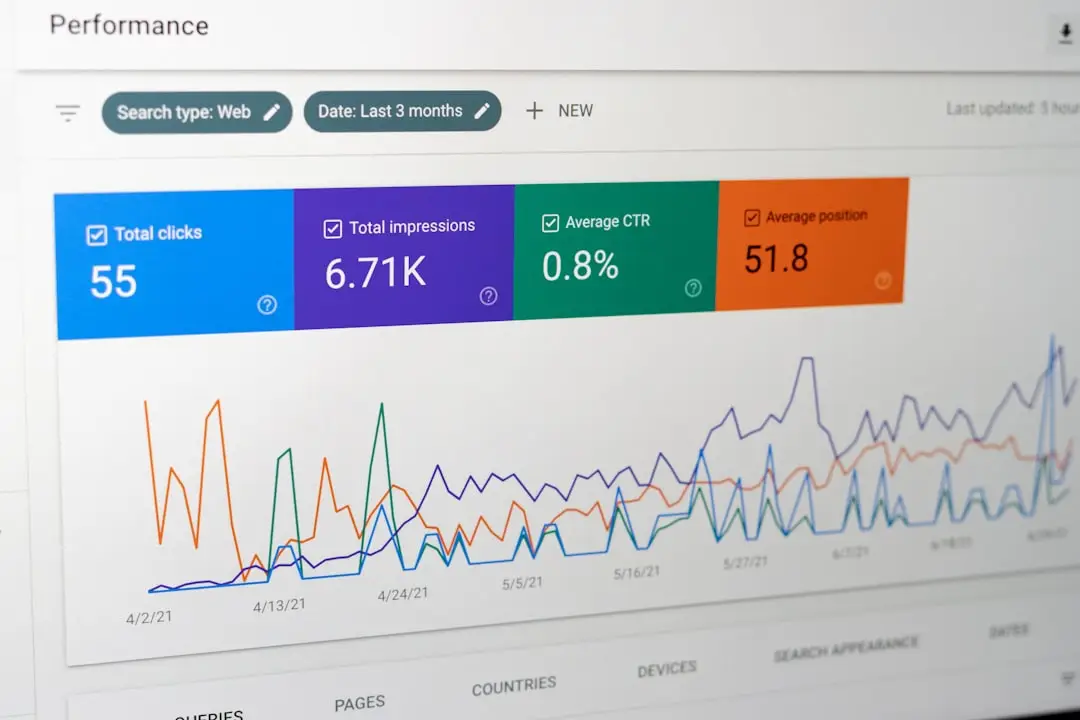
The short answer is no, AI won’t replace SEO. Instead, it’s shaking things up, making SEO smarter, more strategic, and frankly, a bit more exciting. Think of it less as a threat and more as an evolution.
Interested in being advertised as South Florida's Best? Check out their latest promotion!
How AI Is Changing the SEO Game
AI isn’t here to do away with SEO; it’s here to supercharge it. We’re seeing a shift where machines take on the grunt work, leaving humans to focus on the big picture.
Automation of Tedious Tasks
Remember those endless hours spent on keyword research, sifting through data, or poring over site audits? AI is stepping in to automate these more repetitive, data-heavy tasks. This means SEO professionals can spend less time on manual labor and more time on high-level strategy. It’s about letting the machines do what they do best – processing large amounts of data quickly – so we can do what we do best: thinking creatively and strategically.
The Rise of Strategic Thinking
With AI handling the mundane, human SEOs are becoming even more valuable. The new skill set isn’t just about tweaking meta descriptions; it’s about understanding complex algorithms, crafting brand narratives that resonate, and developing comprehensive strategies that AI can then help implement. This isn’t just about being good at SEO; it’s about being an expert in digital marketing with a deep understanding of user intent and brand messaging.
As the landscape of digital marketing continues to evolve, many are questioning whether AI will ultimately replace traditional SEO practices. A related article that explores this topic in depth can be found at The Best Physical Therapy in Deerfield Beach, where the implications of AI advancements on search engine optimization strategies are discussed. This article provides valuable insights into how businesses can adapt to these changes while maintaining their online visibility.
Navigating the Dual-Track Optimization Landscape
The future of search optimization isn’t a single path anymore. We’re looking at a dual-track approach, acknowledging that different search environments require different tactics.
Optimizing for Traditional Search Engines
Google still reigns supreme. With a staggering 90% market share and billions of daily queries, optimizing for Google’s traditional search algorithm remains absolutely critical. This track involves all the tried-and-true SEO practices we know: technical SEO, high-quality content, link building, and a deep understanding of Google’s ranking factors. Don’t throw out your traditional SEO playbook just yet—it’s still the main event for traffic and visibility.
Embracing AI-Specific Optimization
Alongside traditional SEO, a new field is emerging: optimizing for AI platforms. This includes Generative Engine Optimization (GEO) for platforms like ChatGPT and Answer Engine Optimization (AEO/SEO) specifically designed for AI Overviews and Large Language Models (LLMs). This means understanding how AI consumes and presents information, focusing on clear, concise answers that AI can easily syndicate, and structuring content to be highly answerable in a conversational format. It’s a different beast, requiring a focus on data snippets, entity recognition, and direct answers rather than just clicks to a website.
The Realities of AI Search Traffic
While the hype around AI search is undeniable, it’s important to ground ourselves in the current market reality. AI search is a powerful new tool, but it’s not yet the primary driver of web traffic.
AI’s Niche Role in Traffic Generation
As of mid-2025, AI search traffic for most websites remains quite low – often less than 1%, and frequently below 0.5%. While platforms like ChatGPT handle millions of queries daily, this pales in comparison to Google’s billions. Moreover, many LLM interactions are for unique, conversational prompts rather than the quick, transactional searches that drive a lot of traditional web traffic. This means that while it’s growing, AI search is currently an additive channel, not a replacement for traditional search volume.
Understanding User Intent in AI Search
Users often turn to AI for different reasons. They might be looking for nuanced explanations, brainstorming ideas, or asking complex questions that require synthesis rather than a simple link. This distinction informs how we should optimize for AI – focusing on comprehensive, well-structured information that AI can confidently present as a direct answer, rather than just ranking for keywords to drive clicks. It’s about providing the answer directly, not just pointing to where the answer might be.
Sure, here is the sentence with the clickable link:
Try a FREE AI Demo.
The Impact on Click-Through Rates
One of the most significant shifts we’re seeing is how AI Overviews are affecting how users interact with search results, particularly when it comes to clicking through to websites.
Declining Organic CTRs
AI Overviews are now showing up in a substantial portion of searches – up to 25%. When these overviews appear, organic click-through rates (CTRs) for those search queries can plummet by as much as 61%. This is a huge shift. If Google or another AI provides the answer directly in the search results, fewer people feel the need to click on a website link.
The Rise of Zero-Click Searches
This phenomenon contributes to the growing trend of zero-click searches, which now exceed 80%. This means a vast majority of searches end without a user clicking through to an external website. For businesses, this is critical. It means that simply ranking high isn’t enough; your content needs to be structured so that AI can extract salient points and present them directly to users. This pushes businesses to refine their AEO (Answer Engine Optimization) strategies to capture visibility even in a zero-click environment. It’s about being the source of truth for the AI, even if users don’t land on your page directly.
As the landscape of digital marketing evolves, many are questioning whether AI will replace traditional SEO practices. A recent article discusses the implications of AI advancements on search engine optimization strategies, highlighting the potential for AI to enhance rather than completely replace SEO efforts. For those interested in exploring this topic further, you can read more about the intersection of technology and marketing in the context of local attractions like the beautiful gardens and sanctuaries in Broward County by visiting this link.
The Evolution of SEO Job Roles
Far from eliminating SEO jobs, AI is actually reshaping them. The skills required are evolving, and those who adapt will find themselves in a stronger, more strategic position.
From Task Executor to Strategic Thinker
The traditional SEO role, often seen as a tactical one focused on execution, is transforming into a more strategic position. AI can perfectly execute technical audits, keyword clustering, and even content generation drafts. This frees up human SEOs to focus on high-level strategy, brand development, understanding complex user journeys, and deciphering algorithm updates. Those who stick to basic task execution are at risk, but those who embrace AI as a powerful assistant will thrive.
The Growing Demand for AI-Savvy SEOs
The market isn’t looking for SEOs who are terrified of AI; it’s looking for those who can integrate it seamlessly into their workflows. Expertise in prompting LLMs, interpreting AI-generated insights, and strategically deploying AI tools will become standard requirements. This isn’t just about using a new tool; it’s about understanding how those tools fundamentally alter the digital landscape and how to leverage them for competitive advantage. The future belongs to those who see AI as a partner, not a competitor, in the SEO journey.
The Coexistence of Search Channels
The idea that AI search will completely replace traditional search is increasingly being proven false. What we’re seeing is a future where these channels coexist, each with its own strengths and user base.
AI as an Additive Channel
Think of AI search as a new avenue for discovery, not a replacement for the highway. Both traditional SEO and AI search are seeing growing budgets and traffic, and these channels are largely additive. Users are employing both human-powered search engines and AI-powered interfaces for different reasons and inquiries. This means a comprehensive digital strategy must account for both, understanding how each channel serves distinct user needs and contributes to overall visibility.
Convergence Over Time
While distinct now, the lines between traditional and AI search are expected to blur over time. As AI becomes more deeply integrated into search engines and user interfaces, users might stop consciously distinguishing between “AI search” and “traditional search.” The current distinction is a temporary phase as technology evolves. The ultimate goal for SEOs will be to optimize for “search” itself, regardless of the underlying technology, ensuring their content is accessible and discoverable across all platforms where users seek information. This holistic approach will be key to long-term success.
AI Search Strategies That Help South Florida Businesses Get Found Online
FAQs

1. What is AI?
AI, or artificial intelligence, refers to the simulation of human intelligence in machines that are programmed to think and act like humans. This includes tasks such as learning, problem-solving, and decision-making.
2. What is SEO?
SEO, or search engine optimization, is the practice of increasing the quantity and quality of traffic to a website through organic search engine results. This is achieved through various strategies such as keyword optimization, content creation, and link building.
3. Will AI replace SEO?
While AI has the potential to automate certain aspects of SEO, it is unlikely to completely replace it. AI can assist in tasks such as keyword research, content optimization, and data analysis, but human input and strategy are still essential for effective SEO.
4. How can AI enhance SEO?
AI can enhance SEO by providing valuable insights and data analysis to inform strategic decision-making. It can also automate repetitive tasks, allowing SEO professionals to focus on more complex and creative aspects of their work.
5. What are the potential implications of AI on SEO?
The potential implications of AI on SEO include increased efficiency and accuracy in data analysis, as well as the need for SEO professionals to adapt and develop new skills to work alongside AI technologies. Additionally, AI may lead to changes in search engine algorithms and ranking factors, requiring ongoing adaptation of SEO strategies.